Fewer Failures, More Production: Predictive Maintenance with AI in Vaca Muerta
Updated: Sep 1, 2025
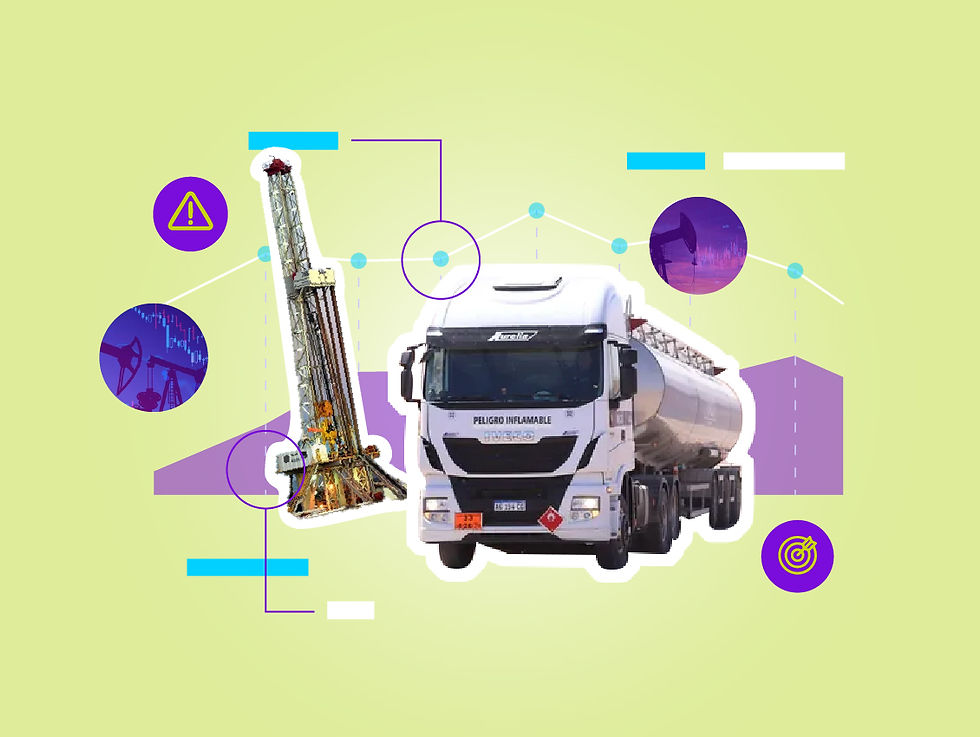
Operations in Vaca Muerta are under constant pressure to be more efficient. Unplanned failures caused by reactive maintenance lead to production losses and avoidable costs. By combining AI with telemetry systems and oil SCADA software, companies can detect issues early and apply predictive maintenance, improving operational reliability, extending equipment life, and reducing downtime.
Why Are We Still Putting Out Fires?
In oil and gas, unplanned failures are costly and dangerous. They affect safety, disrupt production, and force rushed decisions that aren’t always the right ones.
In critical zones like the Neuquén Basin, home to most of Argentina’s unconventional resources, this can mean the difference between meeting quotas or losing millions. In fields like Cerro Dragón, with assets spaced every 60 meters, operations demand precision, visibility, and continuous control.
Traditional maintenance, whether scheduled or reactive, just doesn’t cut it anymore.
The Opportunity: From Reactive to Predictive
Thanks to advances in AI, failures can now be predicted before they happen. This is a game-changer for complex operations such as those of Pan American Energy (PAE) or any company working in Vaca Muerta.
By connecting pressure, vibration, and flow sensors to trained AI models, operators can detect abnormal behavior in real time. Instead of waiting for something to break, teams intervene exactly when needed. This shift marks a historic step forward in production efficiency across the region.
From Data to Diagnosis: How It Works
Field instrumentation: Sensors on compressors, pumps, and valves monitor key variables in gas transport.
Data transmission: Information flows in real time through SCADA networks and telemetry systems.
AI processing: Algorithms analyze patterns, flag deviations, and identify potential future events.
Visualization & action: Automated alerts and dashboards keep engineers, supervisors, and technicians aligned.
The result: faster, smarter decisions based on live data not guesswork.
Direct Economic Impact
Moving to predictive maintenance isn’t just a technical upgrade, it’s a financial strategy. In mature fields or unconventional concessions like Cerro Dragón, every plant shutdown or compressor outage means millions in losses.
Every anomaly caught in time represents concrete savings. Predictive maintenance also reduces premature wear, extends asset lifespan, and cuts unnecessary spending on spare parts or inspections.
This is how oil and gas companies stay competitive in a world demanding more efficient energy sources.
Real-World Applications: From Field to Office
Mature wells: Maintenance schedules adjust automatically as production rates fluctuate.
LNG operations: AI detects microfractures before they escalate into failures.
Shale gas projects: Distributed sensors and SCADA integration allow remote management from urban centers.
Across all cases, AI reduces failures, increases asset availability, and strengthens operational safety.
A Solution Designed for Vaca Muerta
In Vaca Muerta, productivity and efficiency aren’t optional they’re survival. Harsh conditions, vast geographies, and intense production demands require technology that adapts.
Predictive maintenance isn’t just about avoiding losses. It lets teams operate with more confidence, without relying on spreadsheets or blind inspections.
As Chubut Governor Ignacio Torres said, Argentina must innovate to stay competitive. Today, that means using AI to anticipate problems before they hit.
Conclusion: A New Stage Starts Today
The future of Vaca Muerta doesn’t depend only on what’s underground, it depends on how we use the information generated every day.
By applying AI, telemetry, and oil SCADA software to fault detection, your company gains a new level of efficiency, safety, and control. That translates into better use of time, smarter resource allocation, and higher profitability.
And you don’t have to start from scratch. With FITGA Lite, you can take the first step toward predictive maintenance in a practical, scalable way, without disrupting production.
This is the door to a new chapter for Argentina’s oil and gas industry.
FAQ
What is predictive maintenance?
A strategy that uses data and algorithms to anticipate equipment failures before they happen, allowing intervention just in time.
What type of AI is used?
Machine learning models trained with historical and real-time data to identify abnormal patterns in variables like pressure, vibration, or temperature.
Can this be applied to mature wells?
Yes. In fact, predictive maintenance is ideal for mature basins where maximizing existing infrastructure is key.
What infrastructure do I need?
Connected sensors, reliable data connectivity, and a cloud analytics platform. We help you integrate without disrupting operations.
Want to get ahead of failures before they impact your production?
Book a call with our team and discover how predictive maintenance with AI can work in your operation.

Tech Writer
Paulo Srulevitch